.png)
Why Professional Carpet Cleaning Matters After Water Damage in Hillsboro

A washing machine hose lets go overnight, or a slow leak under a window finally soaks through the carpet during a heavy rainstorm. By morning, the padding underneath is saturated even if the surface looks like it is drying out on its own.
Carpet holds moisture longer than most other flooring, and what looks like a manageable spill can turn into a much bigger problem within a day or two if it is not addressed properly. That timeline matters more than most homeowners realize.
This article covers why water-damaged carpet needs prompt attention, what the professional carpet cleaning and drying process typically involves, and how to tell whether carpet can be saved or needs to be replaced.
Why Water-Damaged Carpet Needs Immediate Attention
Carpet fibers and the padding beneath them absorb and hold water more than hard flooring does, which means moisture can stay trapped well after the surface appears dry. Mold can begin developing within 24 to 48 hours if that moisture is not properly removed, often starting in the padding before it becomes visible on the carpet itself.
The longer wet carpet sits, the more likely it is that odor, staining, and mold will set in, and the harder it becomes to fully restore the carpet rather than replace it.
Risks of Delaying Carpet Cleaning After a Water Event
Waiting even a day or two longer than necessary can turn a manageable cleanup into a larger repair. A few common consequences of delay include:
Mold growth in the padding or subfloor, often before it is visible from the surface
Persistent musty odor that regular cleaning cannot fully remove
Staining that sets into the carpet fibers and becomes harder to lift
Subfloor damage if moisture soaks through the padding and sits against the floor underneath
Higher likelihood that the carpet needs full replacement instead of cleaning and drying
The Professional Carpet Cleaning Process After Water Damage
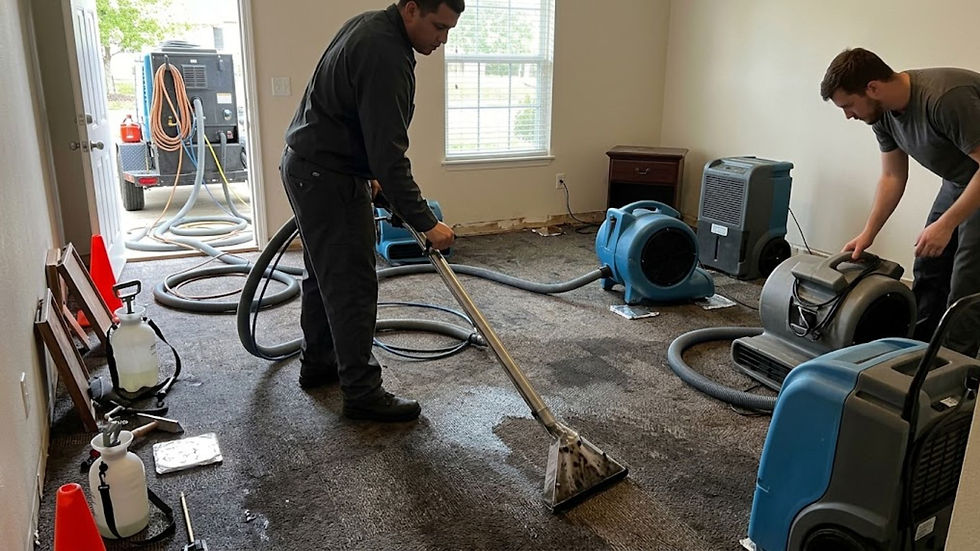
Restoring water-damaged carpet generally follows a structured process rather than a single cleaning pass, since the goal is to fully remove moisture, not just surface-clean the carpet.
Inspection and Damage Assessment
The process starts with an inspection of the carpet's condition, checking how far the water has spread and how saturated the padding underneath has become. This assessment determines whether the carpet is a candidate for cleaning and drying or whether replacement is the more practical option.
Emergency Water Extraction
For actively wet carpet, emergency water extraction removes standing moisture from the carpet and padding as quickly as possible, which limits how much time mold and bacteria have to start developing.
Pre-Treatment and Hot Water Extraction
Heavily soiled or stained areas are pre-treated before professional hot water extraction equipment is used to pull out embedded moisture and contaminants. This method removes significantly more moisture than a basic rental cleaner, which matters most when the goal is thorough drying rather than a surface refresh.
Drying and Final Inspection
Once extraction is complete, the carpet and surrounding area are dried and monitored before a final inspection confirms the carpet is fully dry and clean, with any remaining maintenance recommendations noted for the homeowner.
When Carpet Can Be Saved vs. When It Needs Replacement
Not every water event ends the same way for the carpet involved. A few factors typically determine the outcome:
How long the carpet was wet: carpet addressed within the first day or so has a better chance of being saved than carpet left wet for several days
The source of the water: clean water from a supply line is generally easier to fully restore than water from a sewage backup or prolonged flooding
Padding condition: even if the carpet itself can be cleaned, saturated padding often needs to be replaced separately
Existing carpet age and condition: older carpet nearing the end of its useful life may not be worth restoring even after a relatively minor water event
Every carpet reacts differently to water exposure, which is why an in-person assessment gives a more accurate answer than a general rule of thumb.
Hillsboro's Wet Climate and Carpet Risk
Hillsboro's extended rainy season means homes see more opportunities for water to find its way indoors, whether through a roof leak, a window that was not properly sealed, or water tracked in and left to sit near an entryway rug. Homes with basements or lower-level rooms are particularly prone to slow, less obvious leaks that can affect carpet before anyone notices a problem.
Carpet near exterior doors, in basements, or below window units is worth checking periodically during the wetter months, since these are the areas most likely to show early signs of moisture before a larger issue develops.
Signs of Carpet Water Damage Homeowners Often Miss
Not every water event is as obvious as a burst pipe or a visible flood. Before a bigger problem develops, homeowners may notice:
A slightly damp or spongy feel underfoot in one area of a room
A faint musty smell that comes and goes, especially near exterior walls
Discoloration or a darker patch on the carpet that was not there before
A slight increase in humidity or condensation in the room
Any of these can point to a slow leak or moisture source that has already reached the padding, even if the carpet surface still looks mostly normal.
Frequently Asked Questions
How quickly does carpet need to be cleaned after water damage?
Carpet should be addressed as soon as possible, ideally within the first 24 to 48 hours, since that is the window before mold typically begins developing in wet padding and fibers.
Can wet carpet be saved, or does it always need replacing?
It depends on how long the carpet was wet, the source of the water, and the condition of the padding underneath. Clean water addressed quickly gives carpet the best chance of being fully restored.
Does carpet cleaning after water damage remove odor completely?
Professional hot water extraction removes much more moisture and residue than surface cleaning, which helps eliminate odor at its source rather than masking it, though heavily saturated padding may still need replacement.
Is emergency carpet cleaning available for active water events?
Emergency water extraction and carpet cleanup are offered as part of broader water damage response, since prompt extraction limits how much moisture the carpet and padding absorb.
Will homeowners insurance cover water-damaged carpet cleaning or replacement?
Coverage depends on the specific policy and the source of the water damage. Contacting your insurance provider directly is the best way to confirm what applies to your situation.
Protecting Your Carpet After a Water Event
Wet carpet rarely gets better on its own, and the difference between a full restoration and a full replacement often comes down to how quickly the moisture is addressed. Prompt extraction and thorough drying give carpet the best chance of being saved.
Pacific NW Restoration provides carpet cleaning and water damage restoration for homes throughout Hillsboro, starting with an assessment to determine the right approach for your carpet and padding. Reach out as soon as water reaches your carpet so the extraction and drying process can begin.


Comments