
Winter Fire Hazards: Protecting Your Beaverton, OR Home This Holiday Season

Space heaters, holiday lights, and a kitchen that sees more use than usual all raise the odds of a house fire during the colder months. For Beaverton homeowners, winter brings a specific set of fire risks that are worth understanding before the season gets busy, along with what actually happens if a fire does break out and damage needs to be addressed. Knowing when to call for fire damage restoration in Beaverton can also help homeowners take the right steps toward cleanup and recovery.
Why Winter Raises Fire Risk in Beaverton Homes
Cooler temperatures change how people heat and use their homes, and that shift is where most seasonal fire risk comes from. Space heaters left running near curtains, bedding, or furniture are one of the most common sources of winter house fires, particularly in older Beaverton homes that rely on supplemental heat in rooms the main system doesn't reach well. Holiday lighting adds another layer of risk, especially strands with frayed wiring or lights left plugged in overnight. Fireplaces and wood stoves, which see more use once temperatures drop, can ignite nearby materials or send embers onto flammable surfaces if a screen isn't used. Even cooking-related fires tend to tick up during the holidays, when ovens and stovetops run longer and more often than the rest of the year.
Common Winter Fire Hazards to Watch For
A few specific hazards account for most winter fire calls. Watch out for these common risks:
Space Heaters: Placing heaters too close to flammable materials, leaving them unattended, or plugging them into overloaded outlets can quickly lead to a house fire.
Holiday Decorations: Older string lights, candles near Christmas trees, curtains, or paper decorations can become fire hazards when left unattended.
Fireplaces and Chimneys: Creosote buildup from infrequent chimney cleaning can ignite and cause flames to spread into the surrounding structure.
Overloaded Electrical Outlets: Plugging in extra holiday lights, inflatables, and decorations on the same circuit can overheat wiring behind walls and create a hidden fire risk.
What to Do If a Fire Damages Your Home
Here are the key steps to take after a fire:
Wait for Safety Clearance: Once everyone is safely out, don't re-enter the property until the fire department confirms it is structurally safe.
Avoid DIY Soot and Ash Cleanup: Don't attempt to clean soot or ash before a professional assessment, as improper cleaning can push smoke residue and odors deeper into porous materials like drywall and upholstery.
Document Visible Damage: Take photos and videos of affected areas when it's safe to do so. This documentation can help support your insurance claim.
Contact Your Insurance Provider: Report the fire damage as soon as possible and ask about the next steps for filing a claim and arranging an inspection.
Our Fire Damage Restoration Process
Once we're on site, our process is built around stopping further damage and restoring the home as efficiently as possible.
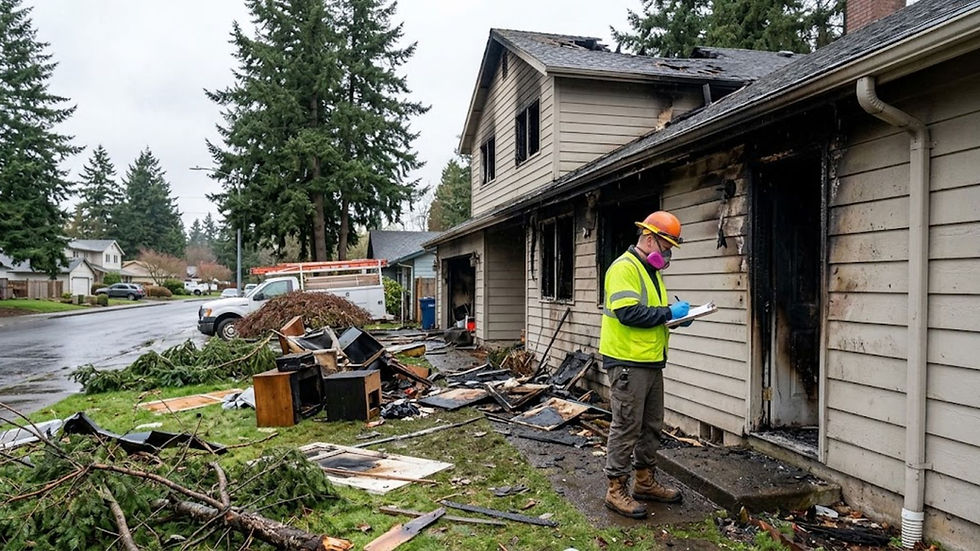
1. Assessment: We inspect the full extent of fire, smoke, and water damage, since fire suppression often leaves significant water damage behind as well.
2. Board-Up and Securing: Broken windows, damaged roofing, or compromised walls are boarded or tarped to protect the home from weather and prevent further loss.
3. Water Removal: Any water used to extinguish the fire is extracted before it causes secondary damage like mold or warped flooring.
4. Smoke and Soot Removal: Specialized cleaning agents and equipment remove soot from walls, ceilings, and belongings, since soot is acidic and continues to damage surfaces the longer it sits.
5. Odor Treatment: Smoke odor gets into fabric, drywall, and HVAC systems, so we use air scrubbers and deodorizing treatments to address the smell at its source rather than masking it.
6. Reconstruction: Damaged framing, drywall, flooring, or cabinetry is rebuilt to restore the home to its pre-fire condition.
How Smoke Damage Differs From Fire Damage

Fire damage is usually obvious: charred materials, melted fixtures, structural loss in the areas the flames reached directly. Smoke damage spreads further and is often less visible at first. Smoke particles settle into carpet fibers, behind outlet covers, and inside HVAC ductwork, which is why a room that wasn't touched by flames can still carry a strong smoke odor and require its own cleaning and deodorizing process.
Protecting Your Home Before Winter Fire Risk Peaks
A few preventive habits make a real difference heading into the holiday season. Keep space heaters at least three feet from anything flammable and never leave one running unattended or overnight.
Inspect holiday lights for frayed or cracked wiring before hanging them, and unplug them when you leave the house or go to bed. Have your chimney and fireplace inspected before the season's first fire if it hasn't been checked recently. Avoid plugging more than one heat-generating device into the same outlet or power strip.
Frequently Asked Questions
What's the most common cause of winter house fires?
Space heaters are consistently one of the leading causes, usually from being placed too close to flammable materials or left running unattended for extended periods.
Can smoke damage affect rooms the fire never reached?
Yes. Smoke travels through HVAC systems and settles into materials throughout the home, so rooms away from the fire can still need cleaning and deodorizing.
How soon should fire damage restoration start?
As soon as it's safe to do so. Soot is acidic and becomes more difficult to remove the longer it sits, and any water used to fight the fire needs to be addressed quickly to prevent mold.
Is fire damage usually covered by homeowners insurance?
Most standard homeowners policies cover fire damage, though the specifics depend on your policy. We document the damage and scope of work thoroughly to support whatever claim you file.
Can I stay in my home during fire damage restoration?
It depends on the extent of the damage. If structural integrity, air quality, or utilities are compromised, we'll let you know whether temporary relocation makes sense while repairs are underway.
Final Thoughts on Fire Damage Restoration in Beaverton
Winter brings specific, preventable fire risks into Beaverton homes, from space heaters to holiday lighting to a fireplace that hasn't been checked in a while. A little attention before the season gets busy goes a long way. If a fire does cause damage this winter, our fire damage restoration team in Beaverton handles everything from initial assessment through full reconstruction, so you're not left trying to figure out where to start on your own.


Comments